


Branding · 17 August 2026
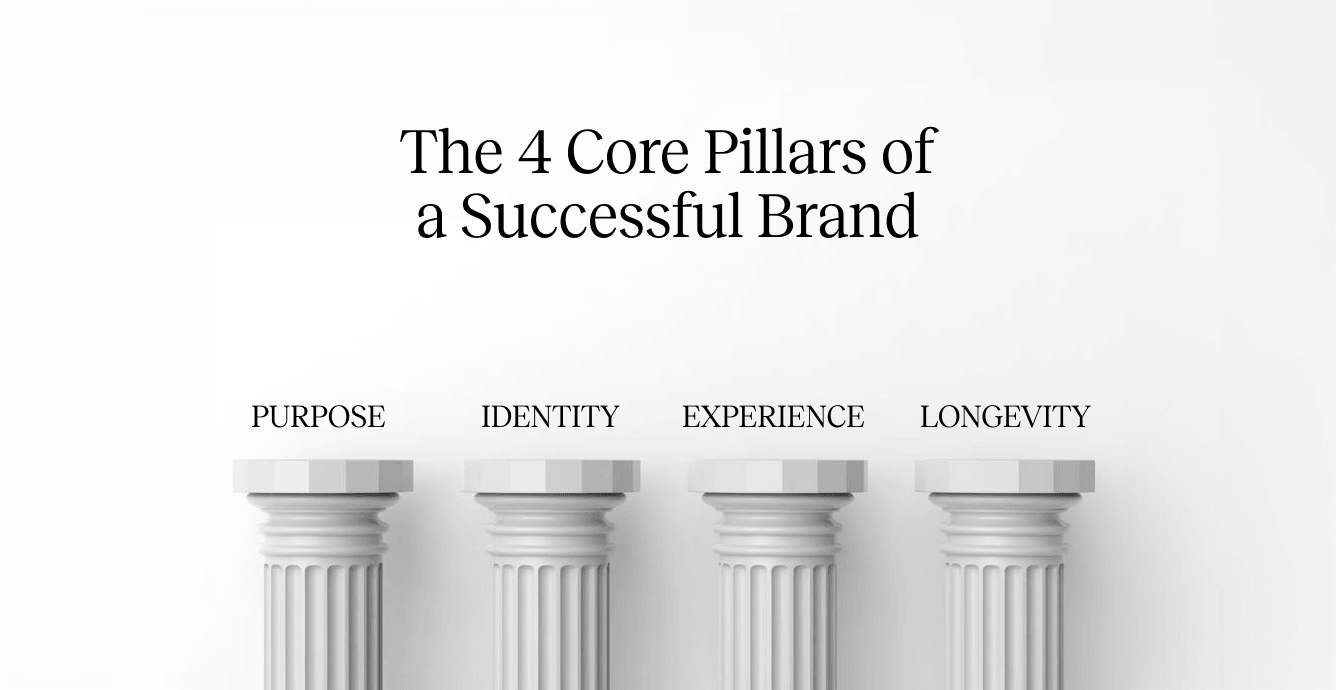
The 4 Core Pillars of a Successful Brand
A brand isn't a logo and it isn't a vibe. The four pillars every strong brand stands on: purpose, identity, experience and longevity, what each one does, and how to build it properly.
Most founders assume the brands they admire are winning on taste. Better logo, better colours, better photography. So they hire a designer, get a new identity, and wait for the difference to show up. It usually doesn't.
The gap isn't taste. It's structure. Every brand that feels inevitable is standing on four pillars: purpose, identity, experience and longevity. Get all four right and the brand compounds. Get one wrong and the other three work harder to cover for it, which is exactly what "our brand just isn't landing" feels like from the inside.
Here's what each pillar does, what it looks like when it's missing, and how to build it properly.
The four pillars at a glance
| Pillar | The question it answers | What it fails as |
|---|---|---|
| Purpose | Why do we exist beyond profit? | A brand nobody can describe back to you |
| Identity | How do we look, sound and feel? | A brand nobody recognises twice |
| Experience | What is it actually like to deal with us? | A brand that promises one thing and delivers another |
| Longevity | How do we grow without losing ourselves? | A brand that gets rebuilt every 18 months |
They're sequential. Purpose feeds identity, identity shapes experience, and longevity protects all three. Skip a step and you're decorating something with no foundation under it.
Pillar 1: Purpose
Purpose is the reason your brand exists beyond making money. It's the belief that drives every decision and attracts the people who share it.
That sounds soft until you watch what happens without it. A team with no shared purpose makes decisions by preference. The founder likes navy, so the site is navy. A competitor launches a feature, so you launch it too. Someone reads a thread about a pricing model and suddenly it's on the roadmap. Without a filter, every decision is up for debate, and the brand becomes an average of whoever argued hardest that week.
Purpose is that filter. It doesn't tell you what to do, it tells you what to stop doing.
What purpose is actually made of
Purpose isn't one statement on a slide. It's a connected set of positions:
| Component | What it settles |
|---|---|
| Mission | What you're here to do, right now |
| Vision | The change you want to exist in the world |
| Values | How you behave when it's expensive to |
| Positioning | The space you own in the customer's head |
| Audience | Who you're for, and who you're not for |
| Differentiation | Why you and not the obvious alternative |
| Story | How you got here and why it's credible |
| Cause | What you stand for beyond the category |
| Promise | What a customer can rely on every time |
How to get it right
Two things separate real purpose from the version that gets written in a workshop and never mentioned again.
The first is specificity that costs you something. "We believe in great customer experience" is not a position, because no competitor holds the opposite view. A real position excludes people. "We only work with pre-Series A teams who can decide in a week" is a position. It loses you leads, which is how you know it's doing its job.
The second is evidence. Purpose is only believable if it shows up in a decision you've already made: a client you turned down, a feature you refused to ship, a price you held. Write your purpose from the decisions you're already making, not from the ones you'd like to be admired for.
Pillar 2: Identity
Identity is how your brand looks, sounds and feels at first glance. It's visual and non-visual, and it's what builds consistency across every touchpoint so people recognise you instantly.
Most founders think identity means logo. Logo is roughly five per cent of it. The parts doing the heavy lifting are the ones that repeat: your colour, your type, the way your photography is framed, the rhythm of how you write. Cover the logo on a piece of your marketing. If nothing else on the page tells someone it's you, you don't have an identity yet, you have a mark.
The full identity system
| Layer | Components |
|---|---|
| Visual | Logo suite, colour palette, typography, imagery, iconography, patterns |
| Verbal | Tone of voice, messaging, naming, tagline |
| Sensory | Sonic identity, motion, texture and material |
How to get it right
Identity has to survive repetition and constraint.
Repetition is the test people skip. A design that looks brilliant on one hero image but falls apart across forty social posts, a pitch deck, an invoice and a 320px screen is not an identity, it's an illustration. Judge every element by how it holds up on the hundredth use, not the first. This is also why distinctive assets matter more than pretty ones: a shape, a colour or a crop that stays consistent for years builds recognition that no rebrand can buy back.
Constraint is the other half. A good system tells your team what to do without you in the room. That means defined rules, not a mood board: which colour carries which job, what happens when the type has to go small, how the logo behaves on a busy photograph. Ambiguity in a system always resolves as inconsistency downstream.
Pillar 3: Experience
Experience is every moment someone interacts with your brand, from the first impression to the memory it leaves behind. It isn't something you decide once. It has to be designed deliberately, and it has to be built on top of your purpose and identity rather than alongside them.
This is the pillar where brands quietly lose. The identity work is beautiful, the website converts, and then the onboarding email is a wall of default text from a tool nobody configured. The support reply takes six days. The invoice looks like it came from a different company, because functionally it did. Every one of those moments is teaching people what you're really like, and they'll believe the invoice over the homepage every time.
Where experience lives
| Stage | Touchpoints |
|---|---|
| Discovery | Ads, social content, search results, word of mouth |
| Consideration | Website, digital UX, sales conversations, pricing pages, proposals |
| Purchase | Checkout or contract, packaging, confirmation, first invoice |
| Use | Onboarding, product, service delivery, environment |
| Loyalty | Support, community, content, renewal and offboarding |
How to get it right
Start by auditing the unglamorous touchpoints. List every point of contact a customer has with you over a full lifecycle, then mark the ones nobody has ever designed. In most companies that's the majority: transactional emails, error states, out of office replies, the form on the contact page, the way the phone gets answered. Fixing five neglected touchpoints usually moves perception more than another homepage redesign.
Then decide what the experience should feel like, and give it a threshold. If your purpose says you're the calm alternative in a chaotic category, that has to translate into something measurable: a response time, a maximum number of onboarding steps, a rule that no email goes out with more than one call to action. Feelings that aren't converted into standards don't survive contact with a busy week.
Pillar 4: Longevity
Longevity is how your brand grows and adapts over time without losing what made people care in the first place. It's the pillar that gets overlooked most, usually because it only pays off on a timescale longer than the average tenure of the person deciding.
Think about how Apple has evolved from rainbow-coloured Macs to sleek minimalism. At no point did anyone question whether it was still Apple. That's longevity: flexible guardrails that let a brand move with the times while staying recognisably itself.
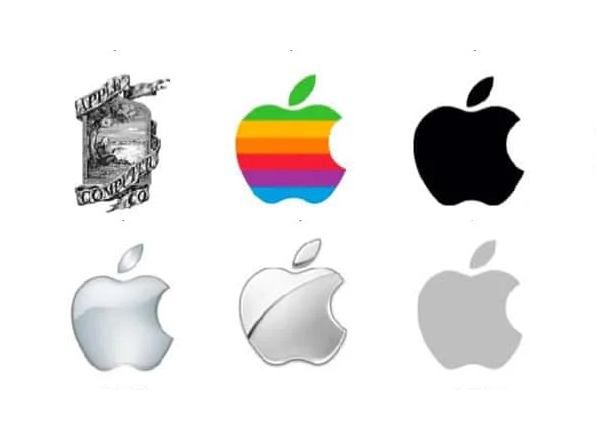
The alternative is the rebrand treadmill. New marketing lead arrives, declares the brand tired, commissions a refresh. Recognition resets to zero, the team learns a new system, and eighteen months later it happens again. Every reset throws away compounding equity you already paid for.
What longevity is made of
| Component | What it protects against |
|---|---|
| Brand guidelines | Drift, inconsistency, guesswork |
| Governance and guardianship | Death by a thousand small exceptions |
| Flexibility | Systems that break the first time you enter a new market |
| Evolution | Looking dated because change was never planned |
| Culture | A brand that only exists in marketing |
| New offers and new tech | Growth that doesn't fit the existing story |
| Relevance and resilience | Being overtaken, or knocked over by one bad quarter |
How to get it right
Longevity depends on separating your fixed core from your flexible layer. The core is the small set of things that must not change: your positioning, your primary distinctive assets, your promise. The flexible layer is everything else, and it's allowed to move: campaign art direction, secondary palette, photography treatment, content formats. Write down which is which. Most brand erosion happens because nobody agreed where the line was, so everything became negotiable under deadline pressure.
Then give it an owner and a review cadence. Guidelines with no guardian are a PDF in a folder. Someone needs the authority to say no, and the brand needs a scheduled review, once or twice a year, where you check what's drifted and what genuinely needs to evolve. Planned evolution is cheap. Emergency rebrands are not.
A quick self-audit
Score each honestly out of five. Your weakest pillar is the one costing you, regardless of how strong the other three are.
| Question | Pillar |
|---|---|
| Could three people on your team describe what you stand for and broadly agree? | Purpose |
| Cover the logo. Is your marketing still recognisably yours? | Identity |
| When did you last review your onboarding emails or your invoice? | Experience |
| Is there a written rule for what can change and what can't? | Longevity |
The takeaway
A brand isn't a logo and it isn't a vibe. It's a structure: a reason to exist, a system that makes it recognisable, an experience that proves it, and guardrails that keep it intact while you grow.
If your brand feels like it's underperforming against people you're better than, don't start with the visuals. Work out which pillar is missing, and build that one first.