Why Good Looking Branding Is Not a Brand Strategy
Over the past month, the same thing has come up on a few different prospecting calls. It's not necessarily a red flag, but it reveals a gap between what people think branding is and what actually makes a brand work.
I'm barely two minutes into a call. We've done our quick intros, they've told me their business name and what they do, and then they ask: "So, what are your initial ideas?"
Let that sit for a second.
The Problem With Jumping Straight to Ideas
An idea with no context isn't creative thinking. It's a guess. Creative thinking has a level of problem solving baked into it. If you have nothing to solve, you're just throwing things at the wall to see what sticks.
Even the best designers in the world can't give you a meaningful answer at that stage. It's not about talent or experience. It's about having nothing to work with yet.
In my own LinkedIn bubble, I keep seeing a handful of really talented visual designers putting out work that looks clean and polished but feels completely soulless. Forgettable. And I can see why the clients they're working for would sign off and believe they've had great work handed to them, because it really does look sleek. But that just isn't enough anymore.
The exciting part (how it looks) only means something if the thinking behind it is solid, so it can be translated into tangible outcomes that help you build a cohesive and scalable brand ecosystem.
If you ask me "what kinda vibe are you thinking?" in the first five minutes of a call, I can't give you that answer. And honestly, anyone who does try to should probably raise alarm bells.
What I Actually Need to Know Before Designing a Brand
I'm planning a more detailed video on this process specifically, so I won't go too deep here. But for the sake of explaining this, some high-level questions and considerations before any visual work begins might be:
What does this business actually do, and who is it really for? Not in broad strokes. Specifically.
What does the competitive landscape look like? Who's doing it well, who's doing it wrong, and why?
What value are you delivering that nobody else is? Or at least, nobody else is communicating properly?
One thing that makes a real difference is asking "or" questions so you can get definitive answers. It's easy for founders to become disconnected from who they actually serve and how they serve them. Instead of asking "who is your target demographic?" and getting something as useless as "everyone who needs our service," you can ask something like: "How do you want to be positioned in the market: premium or challenger? Trusted or disruptive?"
Once I understand all of that, I have something to make real decisions with.
Creative Direction vs. Art Direction
These two terms get thrown around interchangeably, but they're not the same thing.
Creative direction is your brand's why. The strategy, the positioning, the feeling, the world the brand lives in.
Art direction is the what. The visual toolkit you use to bring those things to life: the colours, the type, the photography style, the actual aesthetic execution.
Together, these are the things that holistically make up an actual brand, rather than something that just looks polished on the surface.
The Purple Gradient Sea of SaaS
Want to see what happens when brands skip the "why"? Open tabs with Loom, Stripe, Monday, and Zoom. If the logos were hidden and the copy was redacted, you could probably barely tell them apart.
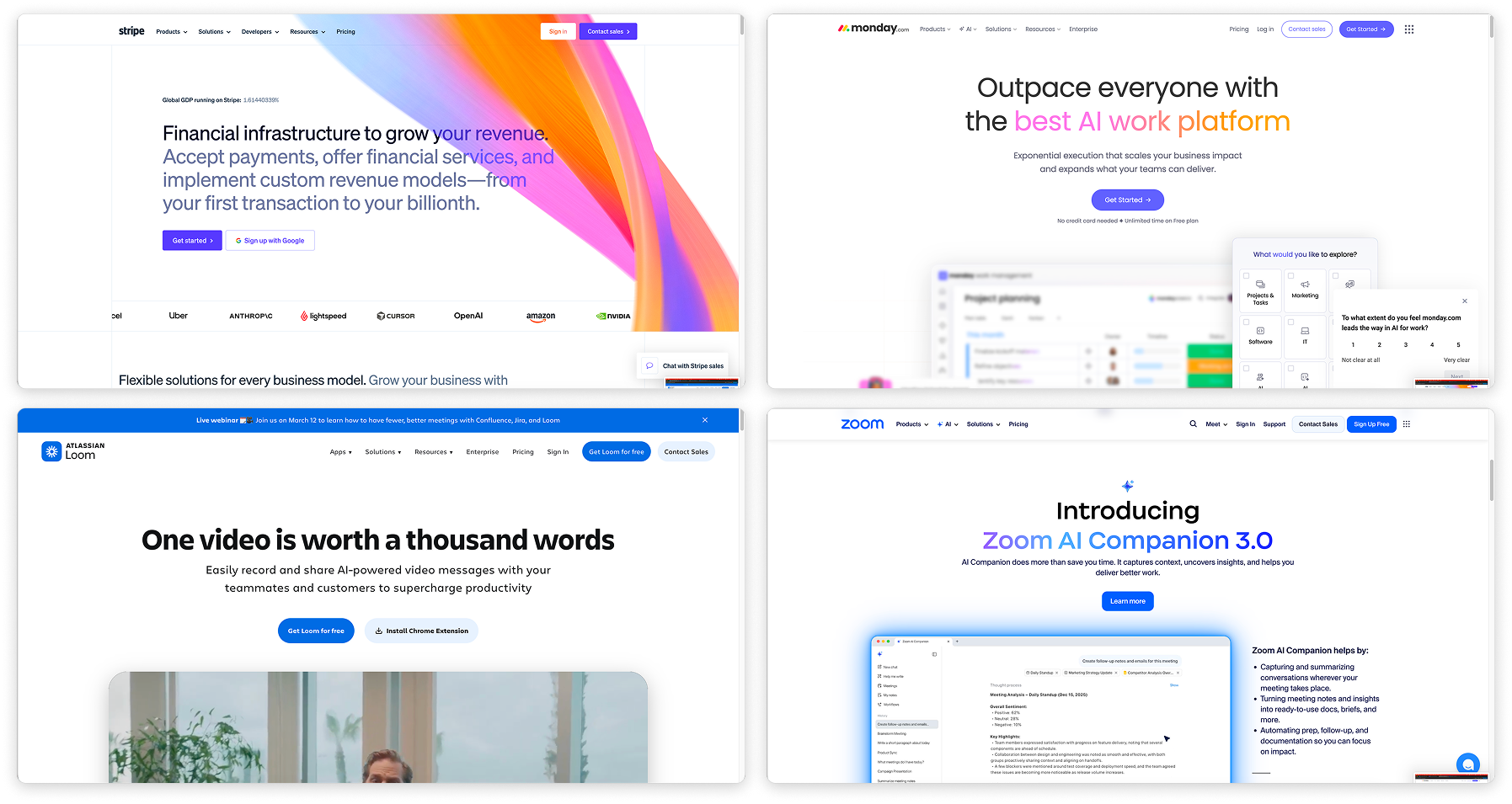
They're all well-designed visually. Clean, minimal, purple-to-blue gradients, friendly sans-serif fonts. But they're all saying the same thing in the same way: "We're a credible tech product."
That's not a brand. It's a costume for their category.
And that's exactly what happens when you brief for the what before understanding the why. The brief was essentially "make us look like a legitimate SaaS company," and that's exactly what they got.
What It Looks Like When the "Why" Comes First
On the flip side, look at Monzo (Originally Mondo).
About ten years ago, they did something completely different in their category. They released their hot coral card in a sea of grey and blue corporate banking apps.
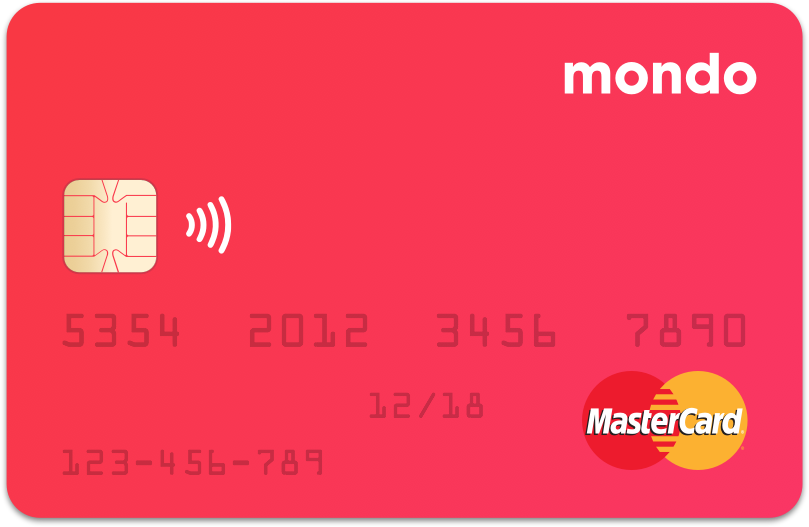
They looked at who was actually fed up with traditional banking: a younger, digitally savvy generation who were used to products that just work. And they built everything around that ideal customer profile, not around what a bank was "supposed" to look like.
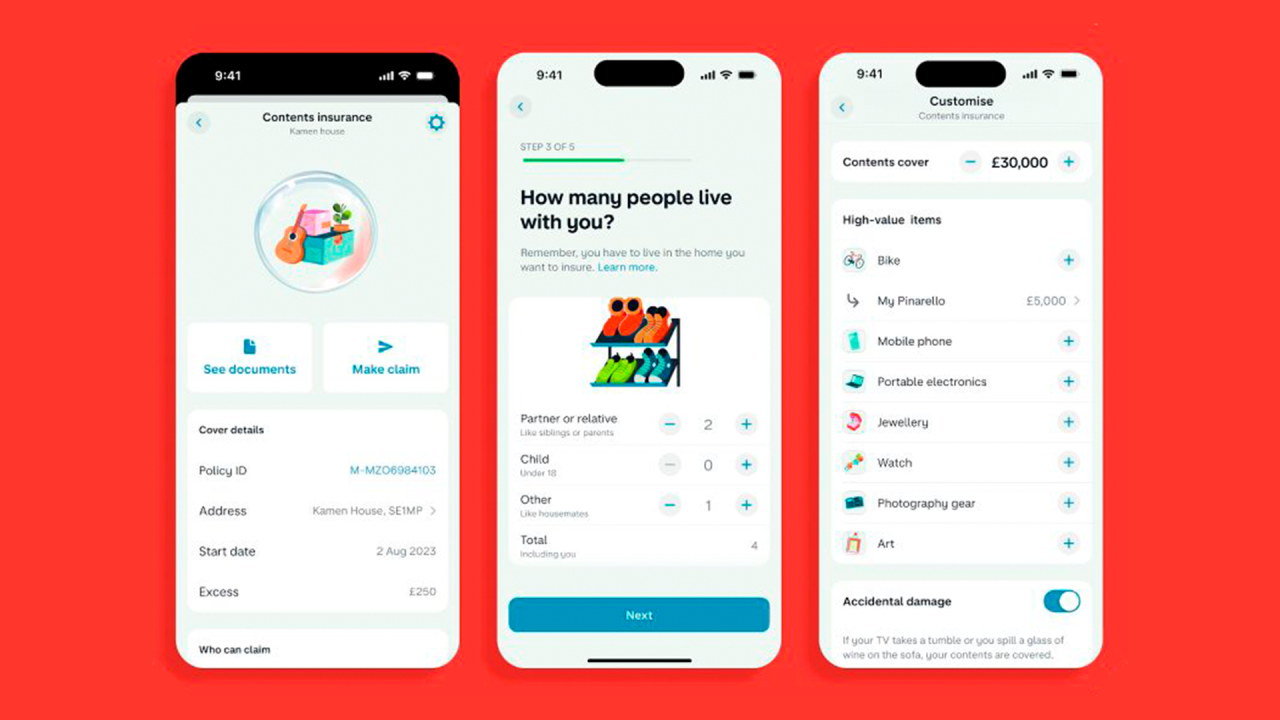
Every decision, from the colours to the tone of voice to the app UI to the way they talked about money, came from a clear understanding of that position.
You felt the difference before you even knew what they offered. That's what creative direction does. It makes the art direction feel inevitable.
The Real Cost of Skipping Creative Direction
So what do brands actually miss out on when they skip the "why"?
They end up with something that looks okay, and probably converts okay too. But okay isn't great.
They rebrand every two to three years because nothing ever quite feels right. They either don't attract enough clients to build traction, or worse, they attract the wrong clients, because the brand isn't saying anything specific to anyone specific.
The money spent on design wasn't wasted on bad design. It was wasted on the wrong brief. And if that's never addressed, the cycle just repeats itself with each rebrand.
That's the thing I keep coming back to in those meetings. It's not that people don't care about creative direction. It's that nobody has ever told them this part exists, never mind the fact that it's actually the most crucial part of the whole process.
The Takeaway
If you only take one thing from this: before thinking about what your brand looks like, get obsessive about:
- What it stands for
- Who it's for
- And how it should make them feel
Everything else flows from that.